Understated flair, untamed fare – The Ledbury in London

The Ledbury cover photo

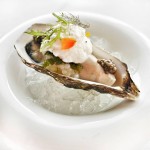
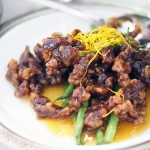
Experiencing The Ledbury in London is like taking a hike in the wild. For one, traveling there takes you out of Zone 1 and into raw Westbourne Park (or Notting Hill, depending on which line you’re taking), where the streets are mercifully quiet and the grass in the gardens of the low-rise housing developments is untrimmed. For another, the typically cheery London weather (read: rainy with biting winds) made my girlfriend K and I look like a pair of inept hipster hunter-gatherers after the brisk walk from the tube station to Ledbury Road. Then there was the food itself; each of the eight courses on our lunch tasting menu took us on a sojourn, past bubbling rivers, through pungent loam, into the very heart of some unnamed countryside. Continue Reading →

A blue cheese masterclass at Classified in Hong Kong

Blue cheese masterclass at Classified

Classified is a chain of several European-style casual restaurants in Hong Kong that I visit regularly for lunch with friends or to happily while away a solitary hour or two with tea and a slice of their delicious carrot walnut cake. It’s part of the Press Room Group, which counts other popular restaurants including The Press Room and The Pawn in its portfolio. Continue Reading →

Postcard from Italy (okay, not really) – Bocca di Lupo in London

Bocca di Lupo, a delightful casual Italian eatery in London's theatre district

I’ve just come back from a two-week holiday in London and Paris, during which I ate until I started hallucinating, and drank more wine than I had in the last twelve months combined.  It was, as you can imagine, a completely indulgent vacation of hedonistic proportions, and a blow to my wallet from which it may never recover (hence justifying my purchase of a pretty new wallet from a luxury men’s store near Portobello market). Over this and my next couple of posts, I’ll share some of the more memorable, and hopefully less well-known, restaurants I visited, starting with Bocca di Lupo, a casual pan-Italian joint in London’s theater district.
Continue Reading →

Pantry Basics: Toad-in-the-hole Redux

Savoury Pudding with Sausage & Tomato

This is a spectacularly simple dish to prepare. Seriously. I spotted the original recipe,which was inspired by English toad-in-the-hole, in the September issue of Martha Stewart Living and was sold on the one pan meal idea. I imagine it would make for a fabulous breakfast after a big night out, but am way past that point of my life (actually, I might have skipped that stage entirely). It works really well as a simple workday lunch and I can totally see it as part of a weekend brunch spread served with a side salad, peas and onion jam. Continue Reading →

Make your day with shoes – from boot to brain inside George Cleverley

Women are spoilt for choice when it comes to buying great shoes.  I know I can rattle off over a dozen names of amazing designers that create gorgeous kicks, ranging from elegant ballet flats or electrifying stiletto heels. The very best designers make shoes that are a both a joy to wear and that make us gals look simply sensational. Unfortunately, for the boys, the choices are a little more limited. As the devoted girlfriend to a metrosexual hunk, I admit that I devote quite a bit of my free time sussing out cool designers that I can introduce to my sartorially-inclined beau. Being in London for a summer of leather accessories courses at the London College of Fashion meant that I recently had the delightful opportunity to meet George Glasgow, owner of cult bespoke shoemaker George CleverleyContinue Reading →

Pantry Basics: How to make shortbread at home

cloud cookie cutter and shortbread

Sometimes, less is truly more. When I’m pressed for time but would like to be able to offer a homemade treat, I remind myself to keep things super simple. After all, a distracted mind tends to make mistakes. I’d rather be able to present a small, unembellished morsel successfully executed rather than an overambitious, spectacular flop. This shortbread recipe from Claire Clark, who was head pastry chef at The French Laundry, fits the bill perfectly. Continue Reading →

Truly great scones

For most guys, scones aren’t exactly the food of our childhoods. They’re things our girlfriends and sisters, mothers and especially our grandmothers, ate. There is absolutely nothing masculine about sitting down for tea and scones. Which meant that for the majority of us boys, during our childhood, it would have been up there with cooties, a trip to the dentist and a haircut. Of course, as we age we get a little wiser and at some point, hopefully a little more genteel. We’re also prone to do anything for the gals in our lives that we love (or think we love) and want to impress. Even if that means sitting through an oh-so-civilized afternoon tea when all we really want to do is hang out with the boys and make fart jokes.

Now, here’s the thing. Most of the scones I have tried throughout my life have been seriously underwhelming. And I’m willing to wager most of my male peers have had similar experiences. I mean, it’s tough enough to sit calmly in an overly romantic and all too prissy atmosphere, string quartet doing serious injustice to Vivaldi, while you sip your Darjeeling from an insanely delicate porcelain cup you’re afraid you’re going to break, all the while trying not to let your significant other have the slightest inkling that you’d rather be in a T-shirt and jeans, throwing back beers and playing video games. You’d hope at the very least that the food you’re being forced to eat — and eat properly (cut scone, spread cream, dollop jam) — wouldn’t taste like dried up cardboard. But most of the scones I’ve tasted, unfortunately, have been hockey puck hard, dry, and spectacularly unappealing. (Keep reading)

Sauce from scratch

There are some foods that we self-professed gourmands try as often as possible to prepare from scratch. We shake our head and pooh-pooh store-bought pasta sauces. Canned soups are verboten from our pantries. We cry foul whenever friends try to serve us pizza baked on premade bases. Pasta must be made by hand. So too must our bread be, kneaded or not. Our fries have to be hand-cut, never frozen. And we take great pride in pointing out that the confit de canard we’re serving is home-made and most definitely not from any can.

But then, there are some other foods that we simply accept for what they are. Despite our new-found (and occasionally pretentious) predelictions against store-bought products, we never even think about making these things from scratch.

Like ketchup for example. I don’t know about all of you, but I’ve been pretty happy eating Heinz for most of my life. It’s one of our kitchen staples. There’s always an open bottle in the fridge and often a sealed one in the pantry (running out midway through a burger is simply a no-no). Unfortunately, most other ketchups just don’t measure up to the “thick, rich one”. Most are either too watery and simply unsavory. One of the rare exceptions is a Swiss German ketchup that S found in a gourmet store. It was nice, with a sharp and almost curry-like taste.

Recently, S and I have been helping some friends develop ideas for a new restaurant here in Singapore. One of the things that came up in conversation while we were brainstorming food concepts was the idea of serving homemade ketchup. S remembered that Heston Blumenthal, one of our food heroes, had included a recipe in his fantastic book Family Food.

The more I thought about it, the idea of making (and eating) ketchup without any artificial ingredients and preservatives was really appealing.

Heston’s recipe calls for 5kg of ripe tomatoes, which yields approximately 500ml of ketchup. Truth be told, I looked at these numbers for quite a while before finally deciding to actually try making it. 5 kilos of tomatoes is one heck of a lot of tomatoes. And to only get 500ml of ketchup seemed like a whole lot for a whole little, both in terms of quantity and in terms of costs of ingredients. But, I rationalized, if it tasted great, better in fact than any other ketchup that I’d ever had, it would be worth it.

Making the ketchup was easy. But it did take several hours, so be sure to set aside enough time. I suggest using the recipe (reprinted below) as a general guideline. I honestly eyeballed almost all of the ingredients (save the quantity of tomatoes that is), slightly increasing and decreasing some to suit my taste.

The resulting ketchup was delicious. Nothing at all like Heinz, but still gorgeously sweet and savory. The combination of ingredients — especially the mustard, cloves, five-spice, ginger and cayenne — gave the ketchup a spicy complexity. One friend who tasted it said it was more like a thick, slightly sweet salsa than a ketchup. Another said it tasted like ketchup, but one that had a real distinct richness. S liked that it really tasted of tomatoes and not artificial thickeners. It worked beautifully with some fries (home-made of course) and a nice bottle of bubbly (hey, a boy’s gotta celebrate these little culinary achievements). I simply can’t wait to spread some on a burger later this weekend.

(Picture note: The fries and ketchup are displayed in a “Nuevo Doble Bowl”, a beautiful disposable plastic bowl from Tast. S and I first saw Tast products at a World Gourmet Festival event in Bangkok a few years ago and fell in love with them. Until recently though, we had no idea where to get these gorgeous Spanish disposable catering tools. We’ve just discovered that you can now get Tast products in Singapore through Ruiter Far East. We think they look great and our friends have been totally wowed by these cute and sexy little plastic bowls.)

Tomato ketchup
From Family Food by Heston Blumenthal
Makes approximately 500ml

5kg very ripe best-quality tomatoes
200g onions, chopped
4 cloves of confit garlic or 2 cloves of garlic
1 tablespoon Dijon mustard
1 tablespoon white wine vinegar
8 cloves
2 coffeespoons salt
1 teaspoon Chinese five-spice
A good pinch of ground ginger
A pinch of cayenne pepper
6½ soupspoons icing sugar

Core and halve the tomatoes, then roughly chop them and put them into a casserole. Cover with a cartouche (a circle of parchment paper that covers the top of the braising liquid in the pan) and bring to the boil, then simmer for 10 minutes.

Pass the tomatoes through a fine-meshed sieve into another casserole, and add all the other ingredients except the icing sugar. Simmer until the mixture is reduced by approximately half and begins to thicken.

Push the mixture through a fine-meshed sieve again, return it to the casserole, and add the icing sugar. Put the casserole back on the heat. Whisking regularly so that the ketchup does not catch and burn, bring to a simmer and cook until the desired thickness and flavour achieved.

Pour the mixture into a sterilised preserving jar, seal, and stand the jar in simmering water for 40 minutes. The ketchup will then keep for several months.

Roast whole suckling pig

I know this post is going to offend some readers. So, I’m placing this little warning here. If you’re among that part of the population that doesn’t condone the cooking and eating of cute, baby animals, please don’t scroll down. If, however, like S and me, you live to eat and absolutely love the idea of tucking into a gorgeously roasted suckling pig, keep reading.

It’s no secret that both S and I love pork. It is most definitely my favourite meat. A healthy portion of the recipes found on this site are pig-dishes. And when S and I recently combed through the two leather-bound books in which we archive our menus, we discovered, not too surpisingly, that we almost always serve at least one pork dish when entertaining.

Over our years together, we’ve prepared pork in many different ways. And while we’ve long considered ourselves pretty pig-proficient, there was always one style–one rather amazing dish–that we would often talk about but never got around to making. Truth be told, I always found the idea of roasting our own suckling pig hugely daunting.

I’m not sure why, but I had always assumed that preparing a roasted, whole suckling pig would be incredibly difficult, time-consuming and complex. The idea, quite simply, scared me. It’s the kind of dish you could eat in a restaurant but not the kind of thing you’d make for a Sunday lunch. Then S came home with a copy of Fergus Henderson’s Beyond Nose to Tail: More Omnivorous Recipes for the Adventurous Cook and declared that we should attempt his amusingly worded Roast Whole Suckling Pig recipe.

What S and I discovered is that roasting a piglet is one of the easiest things we’ve ever done in our kitchen. The hardest part, in fact, was getting over how cute the raw piglet was. Our suckling pig was delivered frozen. It was wrapped tightly in plastic with its front trotters tucked under its chin. When we unwrapped it, it rather pathetically sat on our counter top, looking more like a sleeping pet than a future meal.

Prepping one’s piglet is easy. We were, admitedly, lucky. Our pig came gutted and cleaned. Our only chore was removing its kidneys, setting them aside for our stuffing, and salting the beast inside and out. To supplement Fergus’ recipe (which is entertaining but rather low on details) we also consulted the very detailed, illustrated notes in Julia Child’s Mastering the Art of French Cooking, Volume Two.

Making Henderson’s stuffing took just 20 minutes. It is essentially a confit of red onions and red wine, mixed with stale bread, the pig’s kidneys and some herbs. While we enjoyed it, S has decided that when we next roast another pig, she’ll substitute Henderson’s stuffing for a more Asian glutinous rice mixture studded with shitake mushrooms, chestnuts, dried shrimp, dark soy sauce and salted duck egg yolks (like a rice dumpling or bak chang).

We decided to slow-roast our little piggy for just under 4 hours. It came out beautifully. We were thrilled. The skin was crisp, thin and easy to both cut and bite into. The meat was flavourful, tender and moist. It was fantastic. We served our suckling pig with some asparagus (simply blanched and then seasoned with sea salt and pepper) and a rich, sinful gratin dauphinois spiked with Comte and Beaufort D’Alpage. With all this, we offered our friends the choice between a lovely, light, sweet and zingy Gralyn Racy Red wine and a yummy, slightly savoury and refreshing Weihenstephan wheat beer.

Roast Whole Suckling Pig
inspired by a recipe from Beyond Nose to Tail: More Omnivorous Recipes for the Adventurous Cook
by Fergus Henderson and Justin Piers Gellatly

1 small suckling pig, gutted and cleaned, with the kidneys left within
olive oil
sea salt and black pepper

Stuffing
4 red onions
a dollop of duck fat
375ml red wine
kidneys of the pig, chopped
1/2 loaf of day-old white bread, cubed
2 cloves of garlic, peeled and crushed
8 sage leaves, chopped

A day before cooking, salt and pepper your piglet liberally (we used around 6 tablespoons of salt), both inside and out, and place it uncovered on a wire rack, over a tray, and into your fridge. You want it to be cool and dry.

Cook the red onions in duck fat over low heat until the onions are soft. Pour in the red wine. Let this simmer and reduce until the mixture becomes a yummy, dark red confit. If you find that the onions are becoming a tad dry but aren’t soft enough, you can add a little bit of water to the pan and keep cooking. Add the chopped-up kidneys to the mix. Then add pieces of bread and stir well. Season to taste with salt and pepper. Take off the heat and add the garlic and sage. Set aside until cool to the touch.

When ready, stuff your piglet. Turn your piglet over onto its back and fill the cavity with the stuffing. Sew as much of your piglet shut as you can. I used kitchen twine and a large needle and was able to sew up about two-thirds of its front.

Preheat your oven with the fan on to 150 degrees Celsius. If you don’t have a fan function, heat to 160 degrees Celsius.

Lightly oil a roasting pan or oven tray and place your piglet on it, “sphinx-like”, i.e. belly down, with its legs close to but on the side of the body. Shove a small ball of aluminium foil into the piglet’s mouth. Also wrap the piggy’s ears in foil. Rub a healthy amount of olive oil all over the piglet’s back and sprinkle a little more sea salt over it. Pop it into your oven and roast for between 3 hours 30 minutes to 4 hours. We roasted ours for 3 hours 40 minutes and then turned off the heat in our oven, but left the fan on, and left it inside for another 30 minutes. Note, if you don’t have a fan-assisted oven, you may want to spin your pan around after about 2 hours.

Your pig’s skin should be crisp and the meat tender and moist. Carve it at the table or inside your kitchen. Enjoy!