Power Breakfasts: honey, banana and peanut butter bars

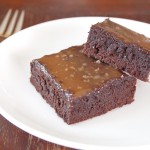
When I think of a nutritious breakfast on-the-go, muesli bars are the ideal. Compact, tasty and substantial enough to keep you filled until lunch, I keep a container of these in the fridge at all times, for a quick bite in the car when we are strapped for time in the mornings. My son loves them as an afternoon snack when he comes home from school, and because these bars are so moist, soft and chewy, I also give small bits (after taking out the nuts) to my 14 month-old daughter to nibble on when she’s peckish. Some added chocolate chips will take them into dessert territory; a healthy, yet still indulgent accompaniment to a cup of tea after dinner. Continue Reading →

Wholemeal Carrot Cake

Every afternoon, between 4-5pm, I put my feet up for ten minutes to savour a slice of something sweet with my cuppa. This slot is pretty much etched in my schedule. It allows me to catch my breath and re-charge before I get on with what I call “evening mayhem”; the dinner-bath-bed routine for my two kids. On the really crazy busy days when I’m deprived of my afternoon snack, I turn into something rather scary. Continue Reading →

Classic British Flapjacks

I have a thing for British food personalities. Maybe I’m drawn to their accent, the way they speak with their hands and how easy they make cooking seem. Or it could just be because familiarity breeds liking; they get tonnes of airtime on TV, and their countless glossy cookbooks dominate the food section in bookstores. For whatever the reason, these guys first got me hooked on cooking and eating when I was in my teens, and today, a lot of what I do in the kitchen is still inspired by them. Continue Reading →

A delicious and nutritious roasted vegetables tray bake

A bowlful of roasted spuds would qualify as comfort food for most. My perfect potato nugget is crisp on the outside, creamy and fluffy on the inside, cooked in olive oil, and seasoned generously with sea salt and black pepper. My cheeky son, A, doesn’t quite fancy white potatoes, but absolutely adores sweet potatoes. Roasting intensifies their sweetness, turning them super caramelised and downright addictive. He prefers sweet potato fries/nuggets to steamed rice anytime, and requests for them about once a week. I’m always happy to oblige, considering how nutritious they are.

Continue Reading →

Pantry Basics: A quick pickle recipe—Japanese pikurusu

Pikurusu

Two months ago, when we happened to have some extra Japanese cucumbers and carrots in the fridge, I thought I’d take advantage of T’s nap time to try out this quick Japanese pickle recipe. CH’s mom—who’d hung up her apron decades ago, long before I’d first met CH, and adamantly declines to cook—happened to be spending the day with T and offered to help. It was to be the first time in over a decade of marriage that I got the chance to cook alongside my mother-in-law.

Continue Reading →

Rachel Khoo’s Puy lentil salad with goat’s cheese, beetroot and dill vinaigrette: a satisfying alternative to meat

Last year, following a friend’s initiative, in the name of sustainability, I decided to cut down on the amount of meat and fish I consume and try my best not to eat meat during weekdays. I also started looking for recipes and cookbooks that are more vegetable-centric. Continue Reading →

Simple savoury souffle

One of the easiest ways to impress friends, when entertaining at home, is by making a souffle. Souffles, as anyone who has made them will attest, can be a total pain in the butt. Dessert souffles especially are tricky and can lead to embarrassment and failure if not executed perfectly. Over the years, however, S and I have realized that savoury souffles are considerably easier to make, and a slightly fallen cheese souffle is fine, whereas a limp and soggy chocolate souffle is simply icky.

S’s favourite savoury souffle (to make at home, that is) is a zucchini souffle. She really likes that the mixture can pretty much be assembled ahead of time—save for the whisking of the egg whites (and, of course, the baking). I think she also likes that this dish is somewhat healthy. Well, once you get past all the egg and cheese, it is technically a vegetable course. (Keep reading…)

Fried hornets and tomato soup

Huge apologies that it’s taken me so long to put up a new post. S and I have been back from Bhutan for just 5 days and it feels like we haven’t even begun to catch up on all the work that’s piled up while we’ve been away.

Our trip to Bhutan was, as I’ve said before, simply amazing. It’s a truly stunning, gorgeous and unique place. And while it’s a country in the midst of some pretty amazing transitions, I have faith that the folks in charge will ensure that its culture and natural beauty will be respected and protected.

While I love so many aspects of this magical kingdom, the one aspect that I’ve never been a huge fan of is its cuisine. When I first visited Bhutan back in 1996 (years before all the fancy-shmancy hotels opened up), I traveled across the country for a couple of weeks. Frighteningly, at almost every meal, I was served the same dish — emadatse and rice. Emadatse is considered by many to be Bhutan’s national dish. It’s a powerful, super-spicy curry made with cheese and chillies. At brekkie, I was offered cold rice and emadatse. Lunch and dinner was hot rice with some edatatse. After that visit, I came to the belief — shared famously by Ruth Reichl — that Bhutanese cuisine might just be the worst in the world.

On this most recent trip, however, S and I were served two home-cooked Bhutanese meals, one cooked by my friend’s wife and the other by a friend of theirs. While emadatse (to my slight horror) was served at both meals, so too were many other local dishes, many of which were surprisingly very good.

But of all the local treats that S and I tasted and enjoyed during our trip, the one that I have to admit I actually enjoyed the most may actually have been the most bizarre. Before lunch with our friends on our last day in town, my buddy’s wife asked if we’d ever eaten hornets. I think I answered something like, “Um… sorry, what? Did you say hornets?” She had. And served us what she explained was a local delicacy two ways: stir-fried with garlic, shallots and ginger and smoked. The stir-fried hornets were delicious. Crispy, spicy, full of yummy meaty flavors. Of course, it was only after S and I had devoured a full serving of the fried hornets, my Bhutanese buddy whispered to me that he actually doesn’t eat the things himself.

Hornets aside, the very best thing I ate in Bhutan was a simple Indian soup served at Uma Paro. In fact, all the very best things I ate during the trip were at Uma Paro. The chefs there are simply fantastic, offering their customers a wide range of Western classics, fusion dishes, Bhutanese specialties and Indian fare. Two night in a row, I opted to eat Indian. On both occasions, I had the Tomato Dhania Shorba as my first course. This tomato soup was simply stunning, made with the freshest ingredients and prepared beautifully. I’ve begged the chefs at Uma Paro to share their recipe and am running it below. Please note that it’s been written in “chef-speak”, i.e. it’s a tad brief and perhaps not even accurate. I plan to try making it later this week and see if it actually works or not. If any of you try it out, I’d be keen to know how or if you tweak it.

Uma Paro Tomato Dhania Shorba

300g tomatoes
20g coriander leaves
250ml vegetable stock
1 whole red chilli
1 bay leaf
5g peppercorns
1g asafoetida
3 cloves garlic
1 inch of fresh ginger, crushed into a paste
salt to taste
2 tsp vegetable oil
5g cumin
1 pinch Kasoori Methi powder
cream

Make a stock of tomatoes and the stems from the coriander.

Add the vegetable stock.

Blend when the tomatoes become soft.

Temper with ginger paste, garlic cloves, asafoetida, crushed pepper, whole cumin, and the red chilli.

Garnish with chopped coriander leaves and and some cream.

Add a pinch of Kasoori Methi powder before serving.

A light, simple mushroom pasta

shroompasta.jpg

For Chinese New Year, friends of ours gave us a lovely selection of locally cultivated mushrooms from Mycofarm. They were irresistibly beautiful. The tall willow mushrooms were lusciously brown and the Hiratake oyster mushrooms were a soft, almost suede-like shade of gray (oh, what I would give for a pair of shoes in that shade). The first-flush shiitakes were plump, meaty, fresh. Laid out in their paper box, the mushrooms looked like an edible bouquet. I was torn between just staring at them and actually tasting them.

shrooms.jpgI eagerly combed through Antonio Carluccio’s treasure trove of recipes in the Complete Mushroom Book (his guide to wild and cultivated mushrooms is a must-read), but couldn’t decide on a recipe. (I am still toying with the idea of buttery, individual tart cases filled with braised duck leg topped with mushrooms sauteed in salted French butter.)

Today, CH decided to use our stash of mushrooms in a pasta. Ordinarily, he would have chosen to add them to a carbonara, alfredo or some other rich, waist-enlarging sauce. While I do enjoy these sauces, I adore tomato-based sauces even more (he doesn’t). I’m also constantly asking him to make lighter sauces. While it may be okay for him to be a chubby hubby, I don’t want to become a super-sized spouse. To make his wife happy, CH decided to showcase our mushrooms in Tetsuya‘s light, tomato-based mushroom ragout accented with touches of Japanese flavour. Tossed with gorgeous saffron linguine, the dish was a sight to behold and yummy to boot. This simple recipe is a definite keeper.

shroompasta2.jpg

Tetsuya‘s pasta with a ragout of oriental mushrooms
from the Tetsuya cookbook

50g linguine
30g shimeji mushrooms, sliced
4 shiitake mushrooms, sliced
12 oyster mushrooms, sliced
1 clove garlic, finely chopped
2 tablespoons olive oil
1 tablespoon sake
2 teaspoons mirin
1/2 tablespoon soy sauce
80ml chicken stock
1 tablespoon julienned parsley
salt and pepper
2 tablespoons peeled and diced tomato
1 pinch chilli powder
1 teaspoon black sesame seeds
chives, cut into 2cm lengths

Cook the linguine in plenty of salted boiling water until al dente. Drain and set aside. Sauté the mushrooms and garlic in the olive oil. Once the mushrooms have wilted, add the sake, mirin and soy sauce. Then add the chicken stock. When the mushrooms are cooked, add the pasta and parsley. Toss. Taste and adjust the seasoning with salt and pepper. Add the tomato, chilli powder, sesame seeds and chives. Serve immediately.

(The mixed punnets of mushrooms are only available at 9 Seletar West Farmway 5. Tel: 6773 0377. But I am told that the individual varieties are available at NTUC, Cold Storage and Carrefour.)

Greek spinach pie

Once upon a time, a sailor with a speech impediment and overdeveloped forearms convinced a generation of kids to eat their spinach. Eating spinach, he told us would make us stronger, faster and give us the ability to save our loved ones from evil… or at least big, ugly bearded guys.

While Popeye was not my favorite childhood cartoon hero, I shared and still share his enthusiasm for this iron-rich, leafy vegetable. As a kid, like so many others, I hated eating veggies. Spinach was one of the few exceptions. Unlike other greens, which I would only eat if disguised in rich creamy sauces or dressed in meat, I enjoyed the taste of spinach ‘au naturel’. As I’ve gotten older, I’ve continued to enjoy spinach in a variety of styles. I’ve previously written about my love for creamed spinach, one of if not my favorite way of preparing my favorite vegetable.

Another favorite spinach recipe is spanakopita, a Greek spinach pie made with phyllo pastry. I used to order it religiously at a Greek restaurant around the corner from my university. This rich combination of feta and spinach coupled with crispy, fluffy phyllo is, when done well, simply delicious. Unfortunately, it’s hard to get good Greek food in Singapore and until recently I’d gone years without sinking my teeth into a good spanakopita.

On my recent trip to Vienna, however, I had a fantastic one. My colleague had dragged me into a tiny Greek restaurant around the corner from Karlsplatz for lunch. While she wolfed down what looked like a great slice of moussaka, I happily consumed an outstanding portion of spanakopita.

It was so good in fact that I’ve been inspired to make my own. After looking at several different recipes in a number of cookbooks, I decided to try the one in Claudia Roden’s The New Book of Middle Eastern Food. From what I read, it looked relatively easy. And it was, until I got to the step that involved separating the thawed phyllo sheets and layering them onto my baking tray. It was my first time using phyllo and while I’d watched others (like my darling wife S) use it, I’d never tried it myself. Many of the thawed phyllo sheets were stuck together and when I tried separating them, they broke apart. After a little patience and a lot of help from S (my savior!), I managed to put the pie together properly. Baking gods be praised… it came out well. I’d even say it was above-average. One of the two friends that we fed it to liked it enough to eat his way through half of the whole tray. For my tastes though, I think it needed a little more cheese and maybe some different kinds of cheeses. The pie tasted, well, healthy. Good, but healthy.

Spanakopita
Adapted from Claudia Roden’s The New Book of Middle Eastern Food

2 pounds baby spinach
4 ounces feta cheese
4 ounces cottage cheese
4 eggs, lightly beaten
1/2 cup dill, fine chopped
1/4 teaspoon grated nutmeg
salt and pepper
14 sheets phyllo pastry
1/2 cup olive oil

Preheat the oven to 350ºF/180ºF.

Wash the spinach, drain and then steam the spinach until soft. Press and drain off any excess water. Then put the leaves in a pan and cook over high heat, drying out the spinach. Mash the cheeses together with a fork. Add the egss, spinach, dill, and nutmeg. Salt and pepper to taste.

Find a baking tray or pan a little smaller than the sheets of pyllo. Brush it with the oil. Place half of the phyllo sheets, one on top of the other, at the bottom of the pan, brushing each sheet with the oil, letting the sheets come up along the sides. Spread the spinach mix evenly on top. Then cover with the remaining sheets, brushing each, including the top one, with the oil. With a sharp-pointed knife, cut 2-inch diamonds with parallel lines into the pie, only down to the filling, not right through. Bake for 30-45 minutes, or until crisp and golden. Cut along the cutting lines, this time right to the bottom, and serve hot.
_______________________________________________

I NEED YOUR HELP!

Please take part in the 1st Annual Asia Pacific Best Restaurants List. Help vote on what you feel are the very best restaurants in Asia, Australia and the Pacific Islands. For info, click on the logo above.

21st Century Tortilla


S adds the foam to a “tortilla”

I’ve never had the pleasure of dining at El Bulli, currently considered (if you agree with Restaurant magazine) the world’s best restaurant. That said, I’ve long admired Ferran Adria, the crazy mad scientist chef-owner who spends half of each year in a laboratory experimenting on new cooking and food preparation techniques. In 2001, I was lucky enough to attend a pretty amazing cooking demonstration put on by Adria, his brother, and another one of his chefs. Over two hours, he wowed an audience of food media, chefs and other industry professionals with his very unique brand of culinary magic. After the demonstration, I was even luckier. My wife S and I got to meet Adria and spend 15 minutes asking him as many questions as we could think of.


You can see how enthused Ferran was to meet me

As I mentioned a few posts back, I was recently inspired to attempt one of Adria’s creations, what he calls his 21st Century Tortilla. The recipe comes from The Cook’s Book, a large and impressive book edited by Jill Norman. Each chapter is written by a different and famous chef. S bought this book largely because of Adria’s chapter on foams. Other great chefs that contributed to this book include Peter Gordon, Pierre Hermé, Charlie Trotter, Greg Malouf, and David Thompson.

Adria’s foam techniques depend entirely on a specific piece of equipment, the siphon. Adria recommends using the 0.5 litre iSi Gourmet Whip. Others similar siphons aren’t as versatile because (according to iSi and Adria) they can’t accept warm (or hot) liquids. For the past few years here, the iSi Gourmet Whips were available in Robinsons, one of Singapore’s larger department store chains. However, when I drove down to pick one up, I was shocked to discover that Robinsons was no longer selling them. In fact, as I called every kitchen supply store in town, I learnt that no one was stocking them any more. At one store, however, I spotted a Kayser Gastronomie siphon. And while I wasn’t sure it would work equally well, after a quick call to a chef I trust, I decided to give it a try.

(Incidentally, I’ve since discovered that you can buy the iSi Gourmet Whips directly from their distributor here, Butler-Mason. Check out their website at www.butler-mason.com. I’ve already ordered a new Gourmet Whip from them.)


Caramelized Onions
250g onion, julienned
85g (3oz) mild olive oil
100ml (3.5 fl oz) water

Fry the onions gently in the oil, stirring continuously for about 20 minutes until golden. Drain off the excess oil and add a little of the water. Cook until the water evaporates. Repeat the process for about 20 more minutes until the onions are the texture of jam and the colour of caramel. Season with salt and set aside in the pan to reheat later.

Sabayon
2 egg yolks
30g (1oz) boiling water
Place the egg yolks in a bowl, beat with a hand whisk and add the boiling water in a thin stream. Beat vigorously over medium heat until it emulsifies. Season with salt.

Potato Foam
250g (8.5oz) potatoes, peeled and cut into chunks
125ml (4.5oz) single cream
35ml (1 fl oz) virgin olive oil, plus extra for drizzling
Place the potatoes in a pan of cold water, bring to the boil, and cook for about 20 minutes until soft. Drain, reserving 100ml of the cooking water. Place the cooked potato and the water in a blender. Purée, adding the cream little by little. Follow the same procedure with the oil until you have a smooth emulsion. Season with salt. Strain, then fill the siphon using a funnel. Load the air using two chargers, shake, and keep warm in a bain-marie at 70ºC (158ºF).


Make sure you strain the emulsion into the siphon

To serve, reheat the onion in the pan. Place a teaspoonful of onion in a martini glass, followed by one of the sabayon. Finish with the warm potato foam and drizzle with olive oil.

Making this has been surprisingly easy. And it tastes delightful. The texture is beautiful–light, creamy and rich all at the same time. I found that adding some chopped up bacon to the onions added an extra (meaty) dimension to the dish that I really like. Having made this, I’m pretty excited to test the other foam recipes in Jill Norman’s book. Plus, I’ve just gotten a little espuma (foam) book from iSi. This is going to be fun.